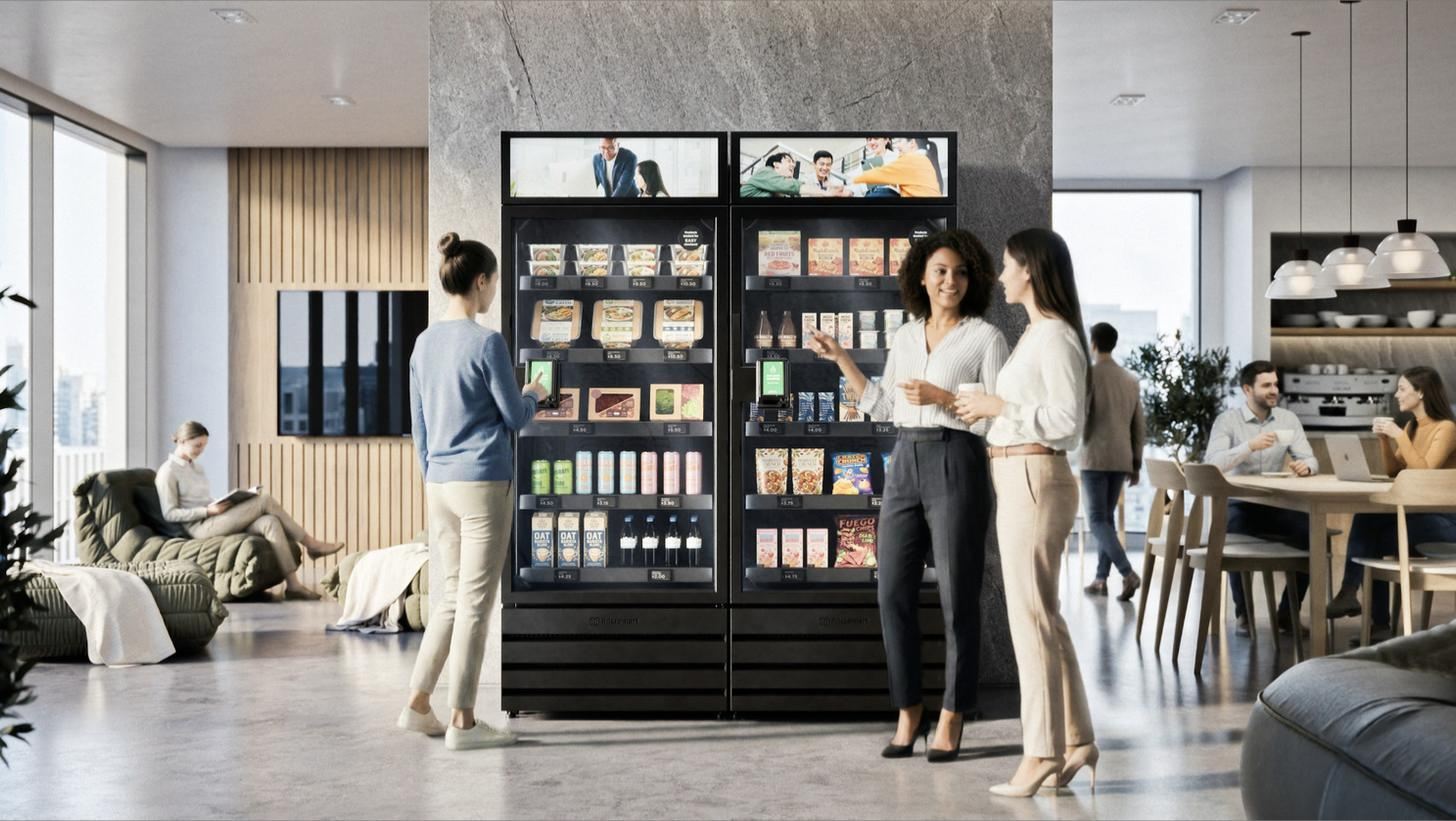
The door unlocks
Card or phone on the reader. Nothing has been charged yet, and nothing needs an app downloaded first — which is the difference between an amenity people use and one they mean to sign up for.

Skala Industries / AI Smart Coolers
An AI smart cooler reads what leaves the shelf and charges the card for exactly that. No scanning, no kiosk, no queue — one wall, running twenty-four hours a day, in buildings where a full micro market would be more room than the room has.
The transaction
There is no scanning step, because there is no scanning. The shelf does the counting.
Card or phone on the reader. Nothing has been charged yet, and nothing needs an app downloaded first — which is the difference between an amenity people use and one they mean to sign up for.
Open it, handle the product, put one back if you want something else. The system is watching the shelf, not the person: it tracks what moved, not who moved it.
The door locks and the card is settled against what actually came off the shelf. No PIN, no receipt to sign, no line behind you while somebody hunts for a barcode.
This is the part that changes behaviour. A vending machine asks for a decision, a payment and a wait, in that order, in front of whoever is standing behind you. A smart cooler asks for none of them — which is why the same building buys more from it, out of the same assortment.
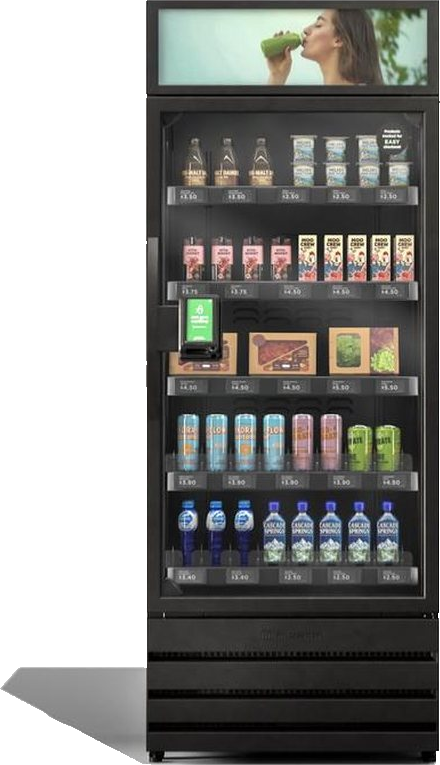 One unit · digital header display
The footprint
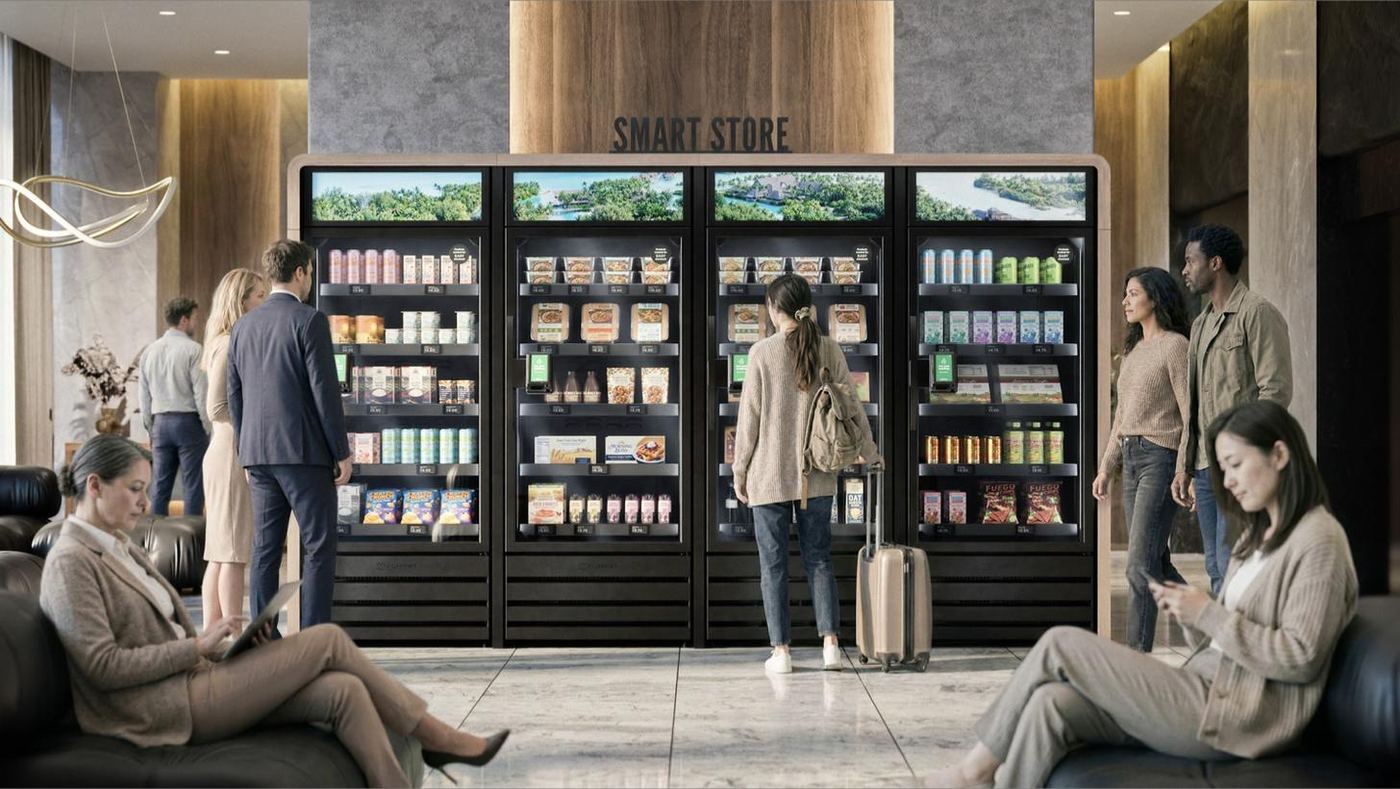
A cooler doesn't need a counter, a millwork build-out or a room you don't have. It needs a wall, an outlet and enough traffic walking past it — which is what makes it the right answer in a corridor alcove, a lobby, or the fourth floor that never walks down to the main break room.
Where they go
The same unit solves three different problems depending on the building it's standing in.
A gym gets used in January. A break room gets used at ten, at noon and again at three. In a medical building where staff cannot leave the floor between patients, it stops being a perk and starts being infrastructure.
In an apartment community or a hotel lobby, the cooler is the reason nobody drives off the property for a drink at midnight. It runs unattended, and it is designed to look like it belongs in the room rather than like it was wheeled in.
Past roughly three hundred and fifty people, one point of service makes a queue at noon. A full market anchors the main break room and coolers go on the floors furthest from it, so nobody has to plan a trip.
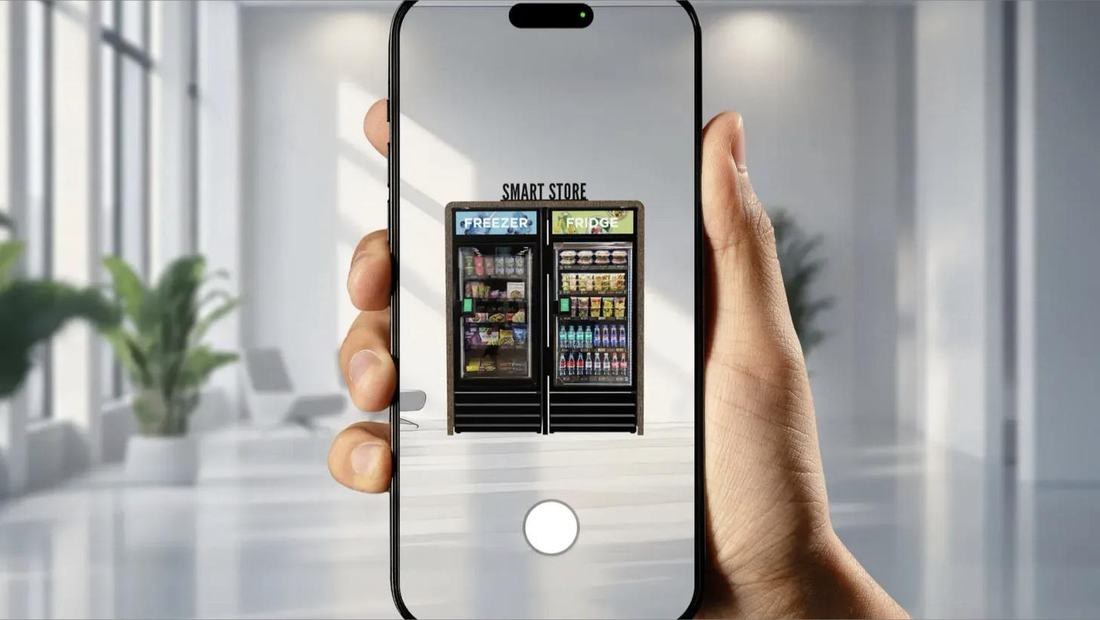 Augmented reality preview
Before you commit
Nobody should sign for a fixture they have only seen in a brochure. You can stand one in your own room right now, from your phone — and then we do the tailored version together on the call.
Cooler or market
It's almost entirely a question of how many people walk past it. Everything else — the service, the route, the standard of care — is identical.
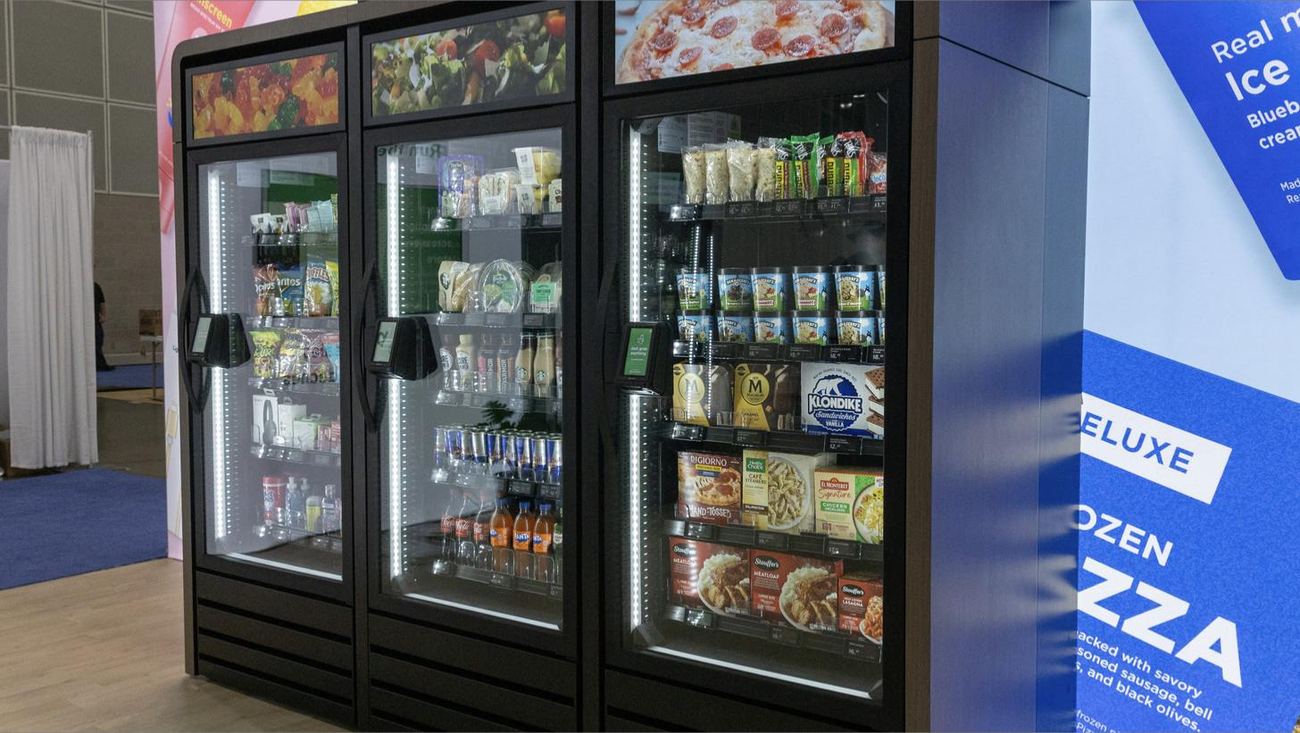 Cooler bank · custom millwork
What goes in it
A cooler carries a tighter range than a full market, so the choosing matters more. The assortment is built for your building's demographics from the same active list the markets draw on — and it is narrowed deliberately, because a narrow shelf kept genuinely full outperforms a wide one that's half empty.
Live shelf telemetry means the pick list is built from what actually sold at your site. If the energy drinks empty by Thursday and the pastries don't, that's visible before either of us has to have a conversation about it — and the shelf changes.
Questions we actually get
Inward-facing visual sensors, watching the shelf — no barcode scanning, no RFID and no weight plates. The cooler knows what was on the shelf before the door opened and what is on it after, and it charges the difference. That's the whole claim — it isn't a chatbot and it isn't making decisions about you. What the shelf actually sees goes through the sensing in detail.
Nothing happens. The charge is settled when the door closes, against what actually left the shelf. Putting something back is just putting something back — it behaves like a fridge, not like a machine that has already taken your money.
The cooler keeps its contents cold and its transaction record locally and reconciles when it reconnects; it runs on its own cellular connection rather than your network, so an office outage doesn't take it offline. Anything genuinely wrong shows up in the telemetry, usually before anyone in the building has reported it.
Yes, and if your headcount is climbing we'll design for it from the start — the wall gets specified so a full market can drop into the same footprint without a second build. Tell us on the call what the building looks like in two years.
Floor space, a standard outlet and access for the weekly restock. Skala owns the equipment and funds the inventory. Commercial terms are scoped on the call, because an occupied building and a new construction project are structured differently.
Skala does, on a fixed weekly route, with the pick list driven by live telemetry from your unit and the planogram photographed after every visit. One named contact here in Las Vegas — not a ticket queue.
A cooler lives or dies on its drinks selection, and ours is not what a national planogram would pick. what actually sells in a break-room market has the ranking — premium water at the top, soda well below it, and three spicy snacks in the top five.
Begin the process
We'll tell you within a business day whether we're a fit — including when we're not. A short call is the only next step.
Thank You for Reaching Out!
Please tell us about your business with the few simple questions in this form, and we'll be in touch to explore how we can work together.