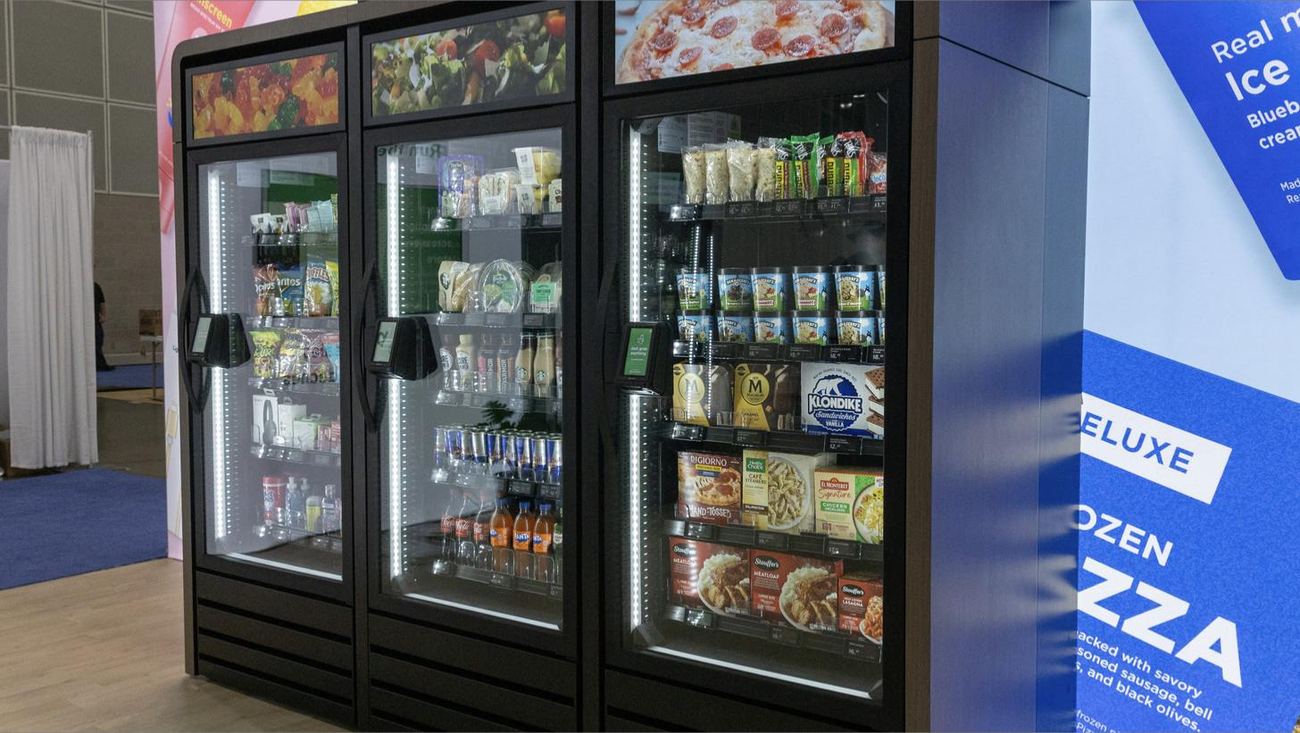
A live Skala micro market: open shelving, a self-checkout kiosk and a Premium Cold Selections cooler bank.

Skala Industries / Micro Markets

Nobody brags about a vending machine.

A micro market is the other thing you can put in that room. Open shelving, a full cooler bank, real food and a self-checkout kiosk, set into millwork built for your space — running twenty-four hours a day with nobody standing behind it.

The format

It is a store.Not a machine.

The difference isn't the technology. It's that people can pick something up, turn it over and read it before they decide.

01 — Open shelving

You can hold it before you buy it

Nothing is trapped behind glass on a coil, and nothing gets stuck on the way down. That one failure is the most common reason people quietly stop using the machine in their break room and start driving somewhere at lunch.

02 — A real cooler bank

The assortment is the argument

Cold drinks at eye level, chilled food, protein, dairy. You cannot sell a real meal through a spiral, which is why a market carries roughly the range of a small shop and a vending machine never will.

03 — Self-checkout

Open at six in the morning and at midnight

A kiosk on the counter, card or member account, camera-monitored. It runs on the night shift and over the weekend without anybody unlocking anything or being paid to stand there.

A Skala cooler bank set into custom wood millwork with digital header screens above each glass door. Custom millwork · digital header displays

The build

Built into the room.Not parked in it.

Fixtures are specified against your actual dimensions, your finishes and your sightlines — not pulled off a shelf and pushed against the nearest wall. In a lobby that matters as much as the product does.

Before anything is ordered
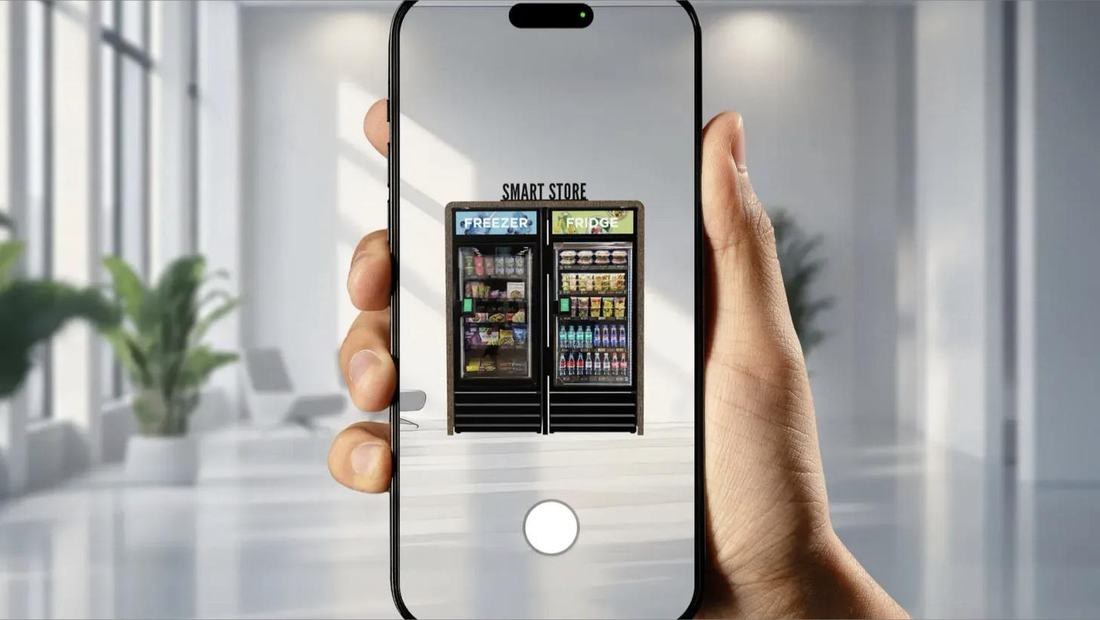
We place the market in your own space in augmented reality — footprint, height, what it blocks and what it doesn't. You see it standing in your room before you commit to it.
What the building provides
Floor space, a standard outlet, and access for a weekly restock. Skala owns the equipment and the inventory and carries the operating risk.
Signed to stocked
Four to six weeks, including the build, the fit-out and the first fill.

What's on the shelf today

126 products.13 categories.

This isn't a category list off a brochure. It's read from the same board that runs our warehouse, and it changes when the shelves change.

Self care is on that list for a reason. Advil at three in the afternoon, cleansing wipes after a shift, a ChapStick in July. It's the category that separates somewhere people rely on from somewhere people buy chips — and it is the one no vending route carries. There is also FIJI and Pellegrino next to the Gatorade, ramen and macaroni for the people who skipped lunch, and, because somebody asked, dog treats.

In use

The busiest roomin the building.

Once it's in

An amenity nobodyknows about isn't one.

A market that opens quietly gets used by the twelve people who walk past it. Launching it properly is part of the service, not an upsell.

Launch signage

Posters and shelf-edge material designed for your market, in your building's language, up before the doors open.

Enrollment QR codes

A code in the market that signs someone up in about a minute, so the first visit becomes an account rather than a one-off.

A welcome offer

New members get a reason to make the first purchase. The first purchase is what makes the second one automatic.

The market newsletter

What's new on the shelf, what's seasonal, what somebody requested and got. It keeps the market in people's heads on the days they weren't hungry.

The header screens

Digital displays above the coolers run their own campaigns. The fixture advertises itself, every hour it's switched on.

Seasonal resets

Vegas in July and Vegas in December are different markets. Electrolytes and cold brew give way to soup and hot chocolate, and the shelf follows.

A phone previewing a Skala smart store in an empty lobby using augmented reality. Augmented reality preview

Before you commit

See it standingin your own room.

Nobody should sign for a fixture they have only seen in a brochure. You can stand one in your own room right now, from your phone — and then we do the tailored version together on the call.

Right now, on your phone
Micromart’s own Location AR viewer puts a real unit in your space at true scale. Pick single, double or triple, and standard or wood finish. No app to download, iPhone or Android. We’re a Certified Micromart Pro Operator, so this is the actual hardware we install — not an approximation.
Then, on the call
We work from your dimensions and two or three photos and place the specified build in your room — footprint, height, sightlines, what it blocks and what it doesn’t — while you’re both looking at it, so you can say “move it left” and we do.
Why it replaced the site visit
Faster for you and more accurate than a tape measure and a conversation. We only come out in person if the site genuinely calls for it.

Fit

A market needsa crowd.

About a hundred people on site daily is the practical floor. Below that, inventory can't turn fast enough to stay fresh — product ages, the experience gets worse, and you end up with the thing you were trying to replace.

We would rather tell you now than install one. If your building has other tenants, we can often count them together and the answer changes.

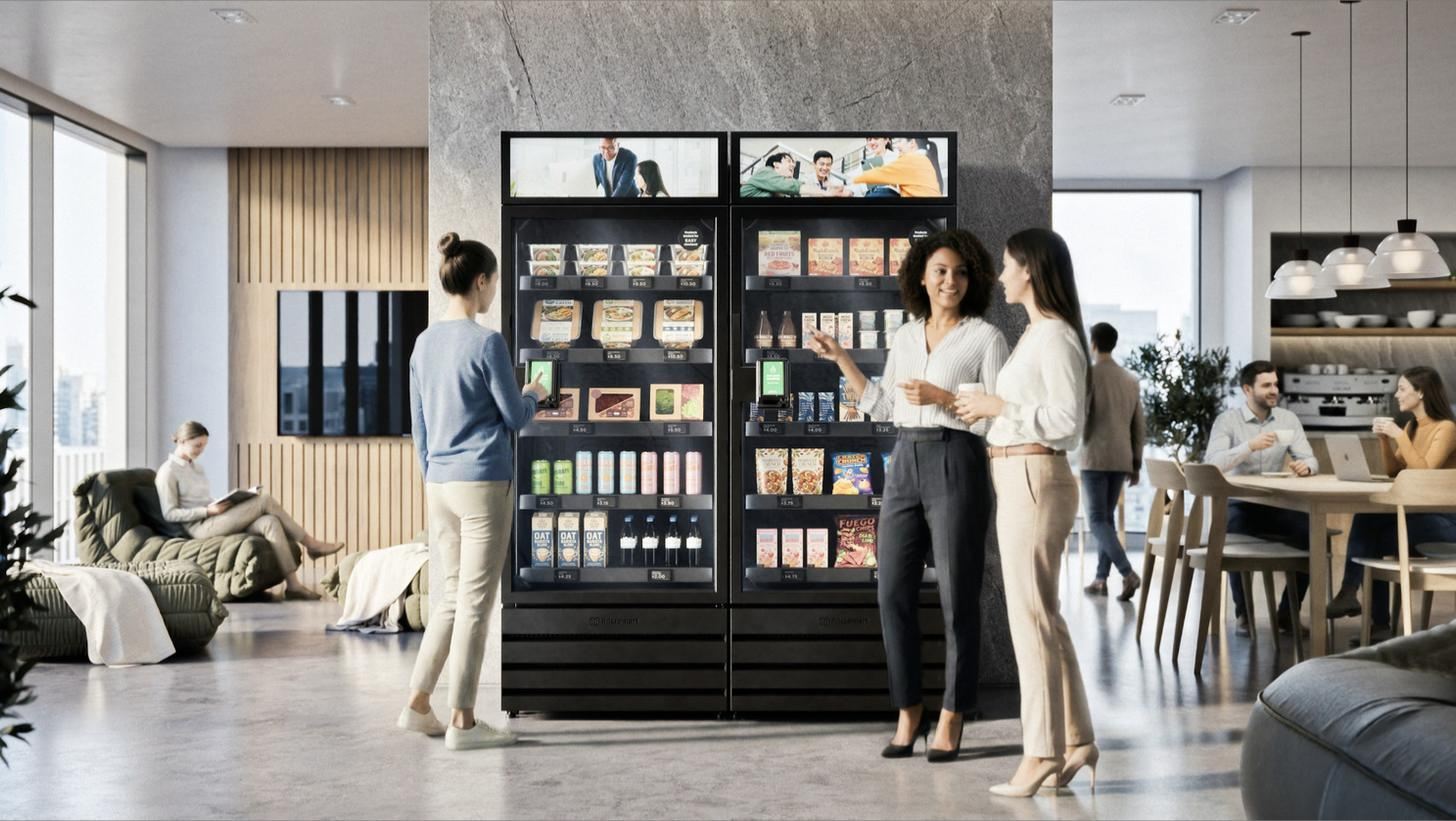
Colleagues in an office break room beside two stocked Skala AI smart coolers with digital header screens. Corporate break room · Las Vegas Valley

Questions we actually get

The ones peopleask on the call.

How is this different from vending?

A vending machine holds around forty selections behind glass and dispenses them mechanically. A micro market is open shelving plus a cooler bank plus a checkout kiosk, carrying several times that range including chilled food, and nothing can jam. The practical difference people notice first is that they can read the label before they pay.

Do people steal from an unattended market?

Some shrink is normal and it's priced into how the business is run. Checkout is account-based and camera-monitored, and in practice a market inside a badge-access building behaves very differently from a shop on a street. The important part for a host: shrink is Skala's risk, not yours.

How much space does it actually take?

A small market fits along one wall of a standard break room. A full one wants a corner or an alcove so the shelving, coolers and kiosk aren't fighting over the same traffic line. Rather than quote you a number, we model it in your room in augmented reality and you look at it.

What about fresh food going off?

Chilled items are dated and rotated on every visit, and the telemetry tells us what is moving at your site specifically before it becomes a problem. A site that can't turn fresh food fast enough doesn't get fresh food — it gets a shelf-stable assortment that stays good, which is a better market than a fresh one with tired sandwiches on it.

We're locked into a vending contract. Now what?

Tell us when it ends. Most of them are shorter than people think, and a few have exit terms nobody has read since they signed. There's no advantage to us in you breaking an agreement — we'd rather be the conversation you have ninety days before it renews.

Who owns the equipment?

Skala does, and Skala funds the inventory. You provide the space, the power and access for the weekly restock. Commercial terms are scoped on the call, because an occupied building and a new construction project are structured differently and one blanket answer would be wrong for one of them.

Begin the process