A store, not a machine in a corner
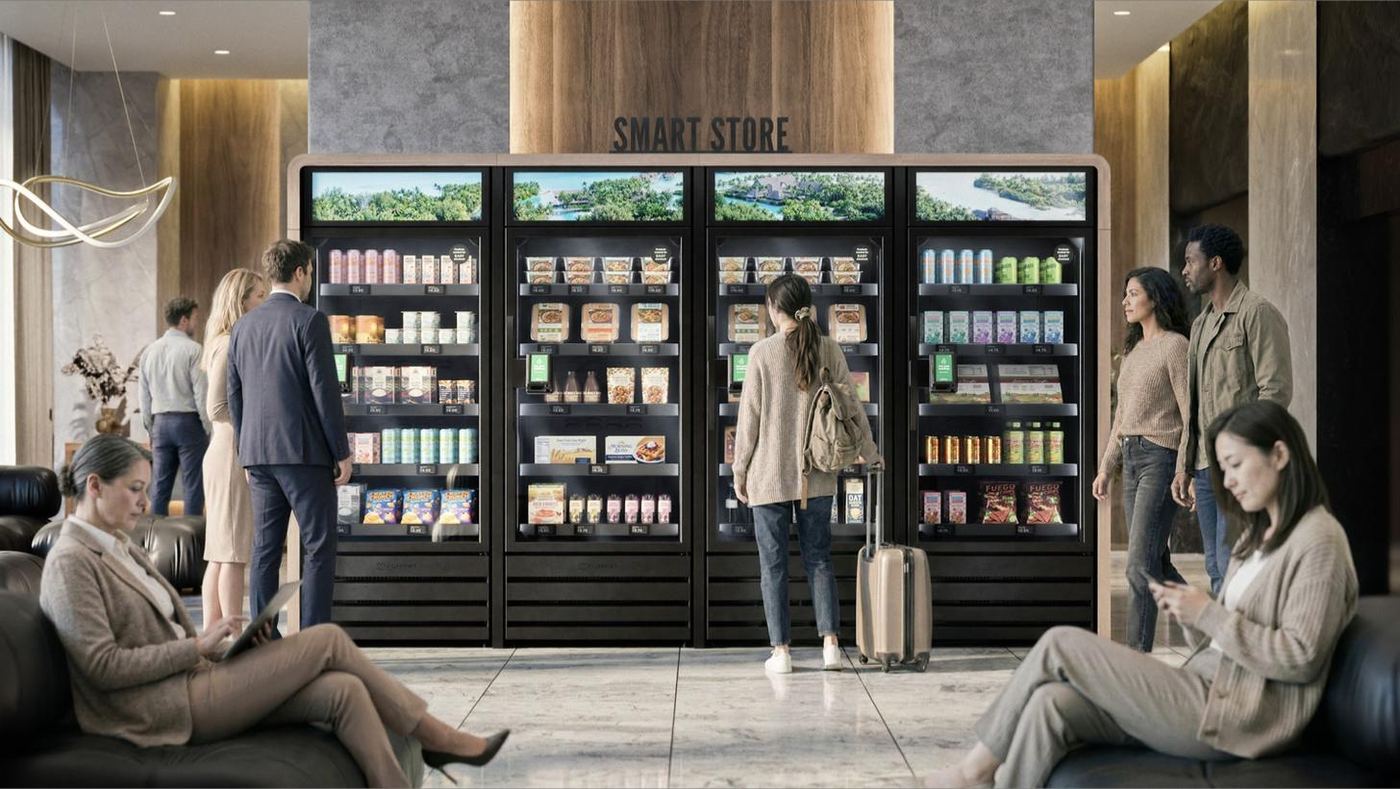
Open shelving, a cooler bank and a self-checkout kiosk built into millwork that matches the room you spent money on. In a leasing tour, that difference is the whole point.

Skala Industries / Apartment Communities
Most amenities are used hardest in the first month of a lease and then quietly forgotten. A market in the clubhouse is the opposite — it gets used on a Tuesday night by someone who is not going to get in the car, and it keeps getting used.
What this building actually needs
The headcount logic is different. An office has a payroll number; a community has residents who are home at the hours the rest of the valley is closed. What matters is how many people live on site, what your occupancy actually is, and whether the clubhouse sits on a path people already walk — the mail room, the gym, the pool gate. A market twenty steps off that path performs like a market in a different building.
Open shelving, a cooler bank and a self-checkout kiosk built into millwork that matches the room you spent money on. In a leasing tour, that difference is the whole point.
New communities here compete against other new communities. An amenity that is genuinely open at midnight is easier to show on a tour than one more lounge, and it is still being used at renewal.
New residents can be given a personal welcome reward that they scan at the kiosk. It is a real hand-off from the leasing office rather than a flyer, and it gets the first visit to happen.
Apartment Communities · Las Vegas Valley
The build
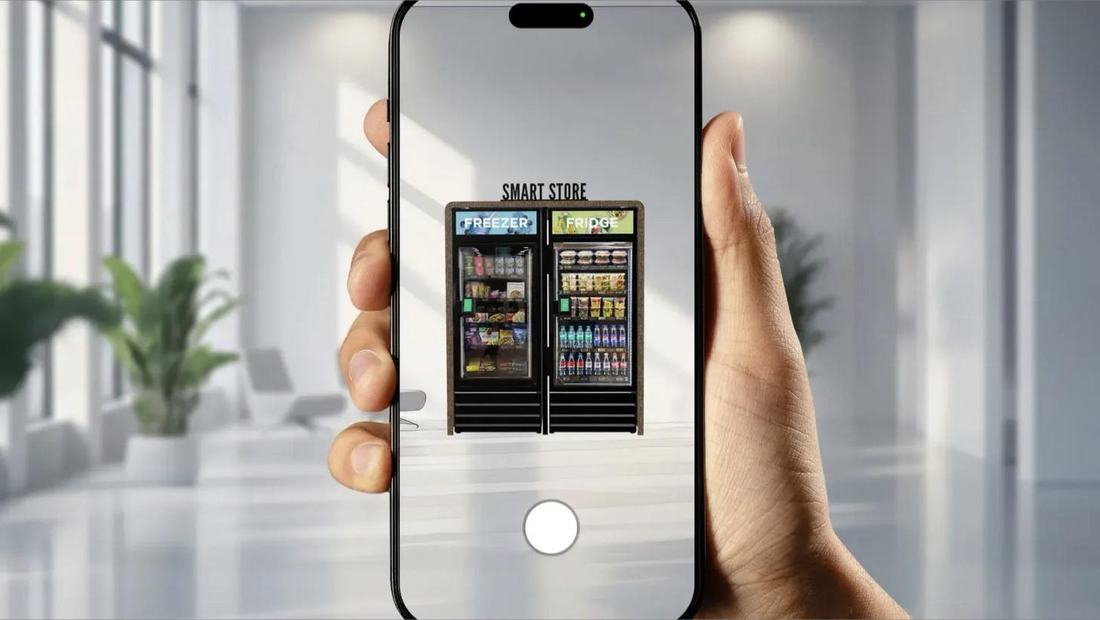
We specify against your actual finishes and sightlines, then place the build in your clubhouse in augmented reality at true scale so you and your ownership can approve it against the real room before anything is ordered.
 Augmented reality preview
Before you commit
Nobody should sign for a fixture they have only seen in a brochure. You can stand one in your own room right now, from your phone — and then we do the tailored version together on the call.
Apartment Communities, specifically
It is about people on site rather than a payroll number, so send us the unit count and your current occupancy and we will tell you honestly whether it will turn. A community that cannot move fresh food gets a shelf-stable assortment or a smart cooler instead — we would rather say that than install something that sits.
On a path people already walk. Clubhouses that sit next to the mail room, the gym or the pool gate outperform ones tucked behind a leasing office, often by a lot. If the room is not finished yet, that is a decision worth making now rather than later.
It is unattended, and checkout is account-based and camera-monitored. A market behind a resident-access door behaves very differently from a shop on a street. Some shrink is normal, it is priced into how we run the business, and it is Skala's risk rather than the community's.
Floor space, a standard outlet and access for a weekly restock. Skala owns the equipment and funds the inventory. Commercial terms are scoped on the call, because an occupied community and a building still under construction are structured differently.
Yes — residents can ask us to carry something directly, and the ones who opt in hear when it arrives. It is a small thing that makes the market feel like it belongs to the community rather than to a vendor.
Residents shop differently from staff on a break — larger baskets, and frozen behaves in a way it simply does not in an office. what actually sells in a break-room market covers that split, including the frozen assortment we had built backwards and what to ask before a freezer goes into a lobby.
Begin the process
We'll tell you within a business day whether we're a fit — including when we're not. A short call is the only next step.
Thank You for Reaching Out!
Please tell us about your business with the few simple questions in this form, and we'll be in touch to explore how we can work together.