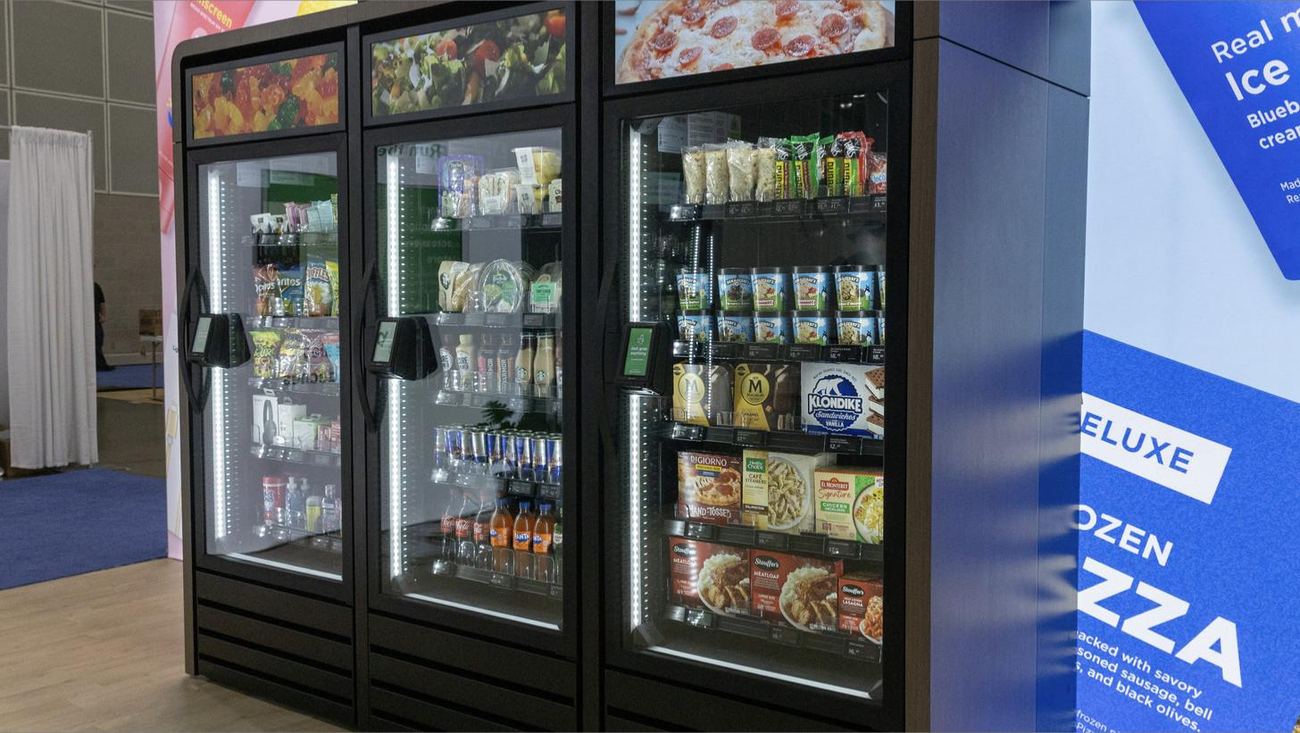
A Skala Industries installation in a Las Vegas Valley building.

Skala Industries / Medical & Clinical

The cafeteria closed at seven. The shift didn’t.

Clinical staff are the hardest people in any building to feed. The break is short, the floor cannot be left unattended, and by the time the night shift takes over there is nothing open on site and nothing worth driving to.

What this building actually needs

Placement matters more than assortment.

In an office, one market in one room is the whole answer. In a clinical building it usually isn’t. A market in the main break room serves administration and the day shift well and serves an imaging suite or a nursing floor barely at all — because the people there are measuring their break in minutes and counting the walk. The build that works puts a unit where the work is, and the market where the room is.

01 — On the floor

A cooler where staff already stand

An AI smart cooler is a single wall-standing unit that opens with a tap and settles when the door closes. It fits a corridor alcove or a staff room that could never take a full market, which means the walk stops being the reason nobody eats.

02 — In the break room

The full market, for the people who get a real break

Open shelving, a cooler bank, fresh and frozen meals, coffee and a self-checkout kiosk. This is where the range lives — including the self-care aisle, which in a clinical building gets used more than anyone expects.

03 — Around the clock

Nights and weekends included

Self-checkout does not care what time it is and nothing needs unlocking by a supervisor. That is the entire difference between a break room that works on three shifts and one that works on one.

A Skala cooler bank set into custom millwork. Medical & Clinical · Las Vegas Valley

The build

Cleanable, badge-friendly, quiet.

Fixtures are specified against your corridor widths, your finishes and your infection-control expectations rather than pulled off a catalogue. Access can sit behind the same badge your building already uses, and the units run on their own cellular connection rather than your clinical network.

What the building provides
Floor space, a standard outlet and access for the weekly restock. Skala owns the equipment, funds the inventory and carries the operating risk.
Signed to stocked
Four to six weeks, including the build, the fit-out and the first fill.
The consultation is a call
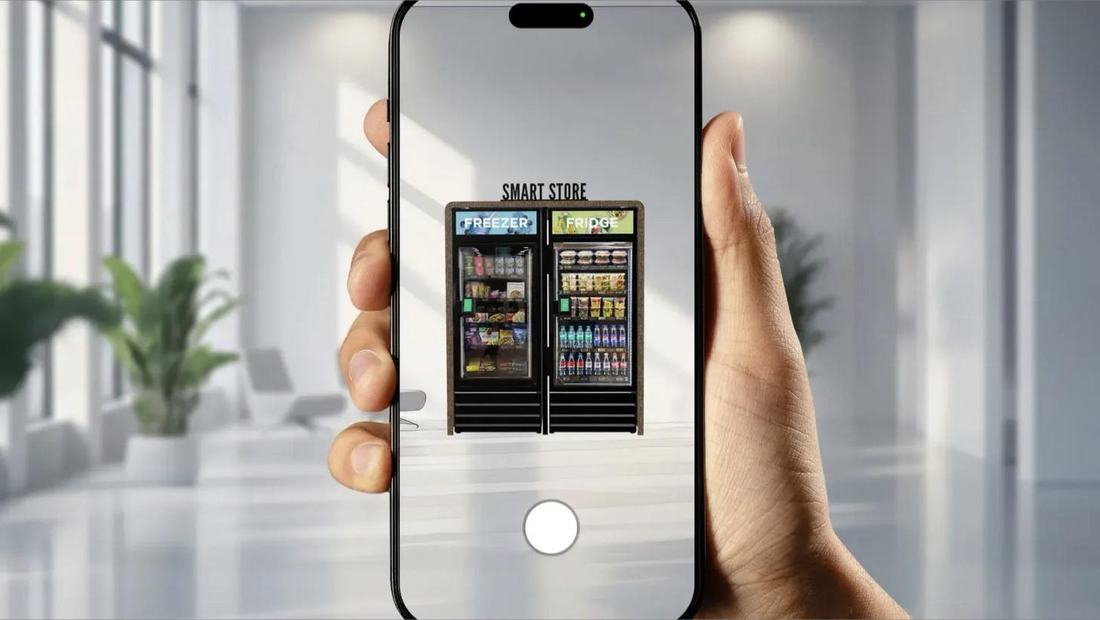
We work from your dimensions and photos and place the build in your room in augmented reality. A site visit happens only when the building genuinely needs one.
A phone previewing a Skala smart store in an empty lobby using augmented reality. Augmented reality preview

Before you commit

See it standingin your own room.

Nobody should sign for a fixture they have only seen in a brochure. You can stand one in your own room right now, from your phone — and then we do the tailored version together on the call.

Right now, on your phone
Micromart’s own Location AR viewer puts a real unit in your space at true scale. Pick single, double or triple, and standard or wood finish. No app to download, iPhone or Android. We’re a Certified Micromart Pro Operator, so this is the actual hardware we install — not an approximation.
Then, on the call
We work from your dimensions and two or three photos and place the specified build in your room — footprint, height, sightlines, what it blocks and what it doesn’t — while you’re both looking at it, so you can say “move it left” and we do.
Why it replaced the site visit
Faster for you and more accurate than a tape measure and a conversation. We only come out in person if the site genuinely calls for it.

Medical & Clinical, specifically

Questions we actually get.

Can a department have its own unit, separate from the break room?

That is usually the better build, and it is what we would push for. One AI smart cooler on the floor plus a full market in the main break room is a different service level from a single market that half the building never reaches. Both are stocked on the same weekly visit.

What do clinical staff actually buy?

Real food far more than snacks, and it skews to the hours nobody plans for. Fresh and frozen meals, protein, coffee and cold caffeine, electrolytes in summer, and a self-care aisle — pain relief, allergy, first aid — that in a clinical building tends to move faster than it does in an office.

Does it need to be on our network?

No. Units run on their own cellular connection, which keeps them off your clinical network entirely and means a building outage does not take the market offline.

What headcount does a medical site need?

About 100 people on site daily is the practical floor for a full market. A single smart cooler works below that. Buildings that host several practices can usually be counted together — a medical office building where four suites share a break area is one site.

Who restocks it, and what happens to fresh food?

Skala does, weekly, on a fixed route. Chilled items are dated and rotated on every visit and the planogram is photographed afterwards. If a site cannot turn fresh food fast enough, we give it a shelf-stable assortment rather than let food sit.

Clinical shifts buy hydration first and decide about food second. what actually sells in a break-room market sets out what actually tops our shelves, why the non-food aisle earns its slot without ever paying for itself in units, and the questions worth putting to any operator.

Begin the process →