When you have the wall for it
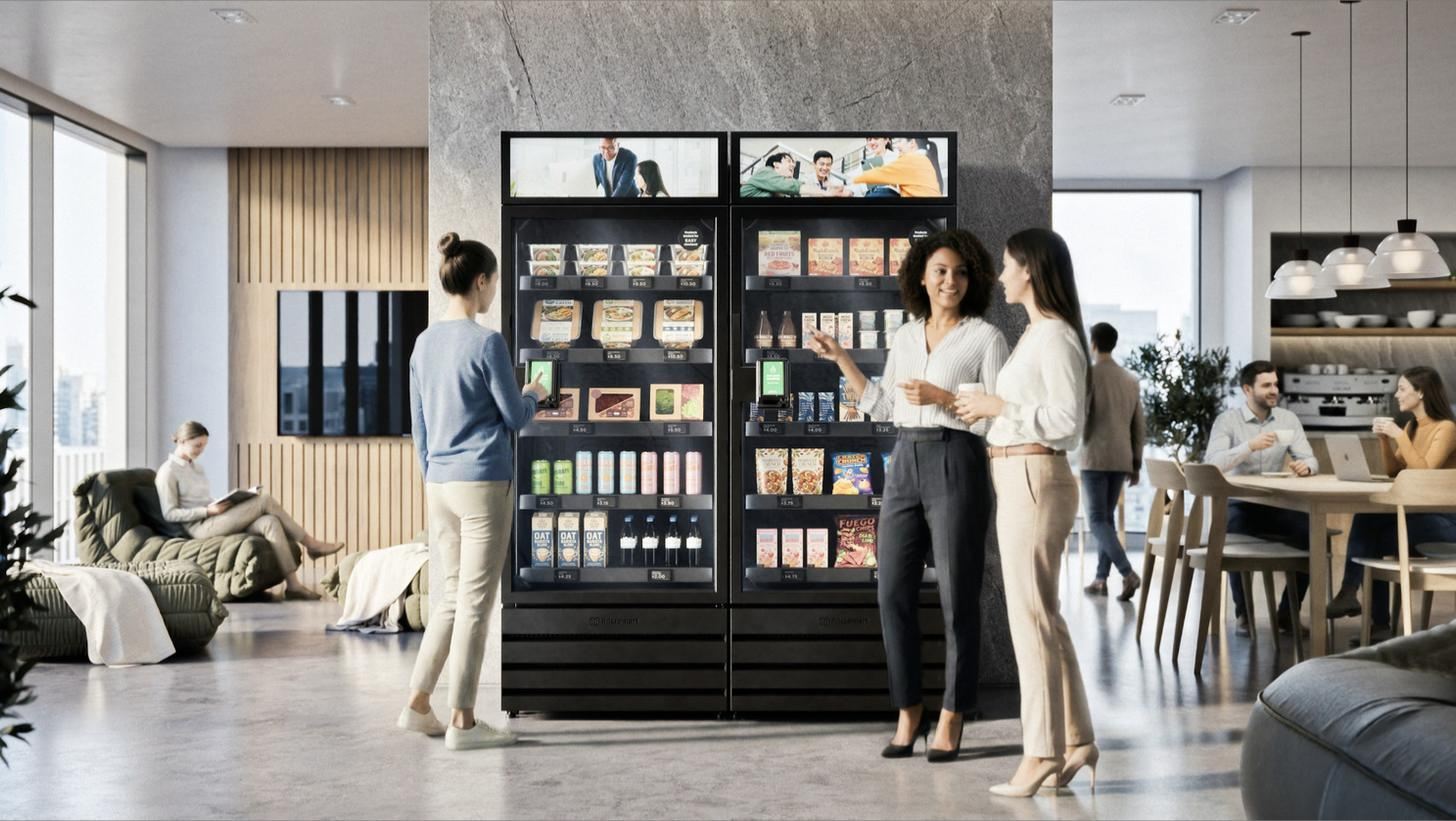
Open shelving, a cooler bank, fresh food, coffee and a self-checkout kiosk built into millwork specified for your floor. It reads as part of the office rather than as equipment parked in it.

Skala Industries / Offices
Attendance is no longer evenly spread. Tuesday through Thursday a floor is full and Friday it is half empty, which changes what a break room has to be — and makes a machine that holds forty selections look even thinner than it did.
What this building actually needs
Stocking an office on its average headcount produces a market that is empty on Wednesday and overstocked on Friday. We plan the fill against the days people are actually in, and we set the restock so the shelf is deepest going into the middle of the week. It sounds like a detail. It is most of the difference between a break room people use and one they walk past.
Open shelving, a cooler bank, fresh food, coffee and a self-checkout kiosk built into millwork specified for your floor. It reads as part of the office rather than as equipment parked in it.
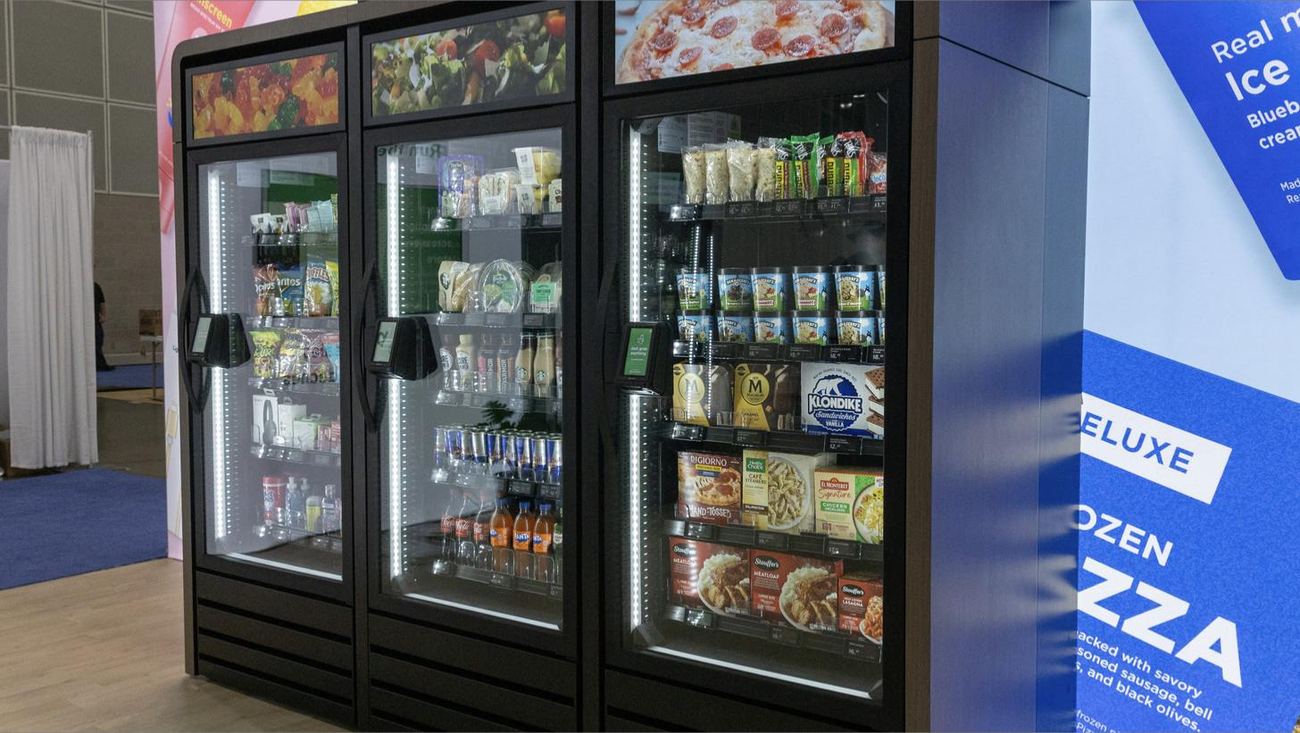
One wall-standing unit, badge or card entry, opens with a tap and settles when the door closes. It fits a floor that could never take a market and carries chilled food and drinks rather than crisps behind glass.
A floor or a building where several tenants share a break area is one site with real headcount. That is often what makes a market possible where a single tenant on its own could not support one.
 Offices · Las Vegas Valley
The build
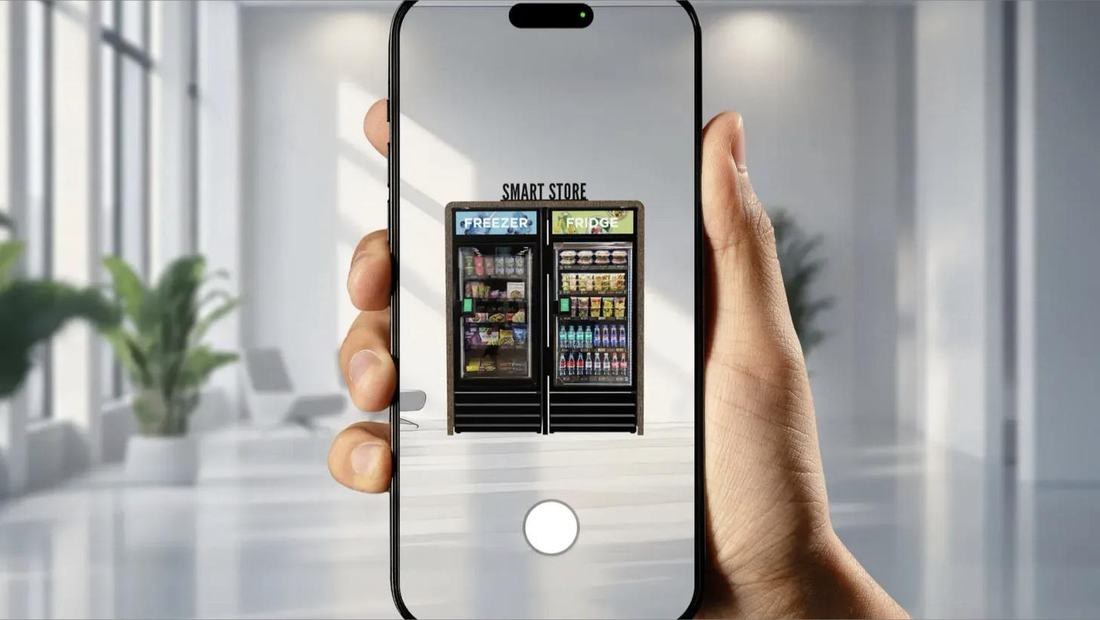
Fixtures are specified against your dimensions, finishes and sightlines, and placed in your actual room in augmented reality before anything is ordered. Recruiting and return-to-office are real reasons offices buy this, and both of them are judged visually.
 Augmented reality preview
Before you commit
Nobody should sign for a fixture they have only seen in a brochure. You can stand one in your own room right now, from your phone — and then we do the tailored version together on the call.
Offices, specifically
About 100 on site daily is the practical floor for a market — measured on your busy days rather than your average. Below that a single smart cooler is usually the honest recommendation, and we will say so.
No, but it changes the plan. We stock against peak days and time the restock so the shelf is deepest going into the middle of the week rather than emptying by Wednesday and sitting full on Friday.
Yes, and if headcount is climbing we design for it from the start — the wall gets specified so a full market can drop into the same footprint later without a second build.
Provide floor space, a standard outlet and access for the weekly restock. Skala owns the equipment, funds the inventory and carries the operating risk. There is nothing for your team to stock, count or reconcile.
Four to six weeks signed to stocked, including the build, the fit-out and the first fill. The consultation itself is a call — we work from your dimensions and photos and place the market in your room in augmented reality.
Planning around the fourth quarter? What changes in a Las Vegas break room between now and New Year's covers the timing — the seasonal demand shift, the holiday weeks, and how far ahead a decision has to be made to be running before Thanksgiving.
Have to sell this internally first? How to get a break-room market approved when you're the one selling it upward sets out the one question each of facilities, IT, HR and legal will put to you, and the one number worth measuring before you ask.
Begin the process
We'll tell you within a business day whether we're a fit — including when we're not. A short call is the only next step.
Thank You for Reaching Out!
Please tell us about your business with the few simple questions in this form, and we'll be in touch to explore how we can work together.